
Exploring Nara Park: A Tranquil Haven in Japan
Nestled in the historic city of Nara, Japan, Nara Park is a serene and expansive green space that offers visitors a perfect blend of natural beauty, cultural heritage, and wildlife encounters. Established in 1880, the park stretches over 502 hectares, making it one of the largest and oldest public parks in Japan. With its rich history, breathtaking landscapes, and the famous free-roaming deer, Nara Park has become a must-visit destination for tourists and locals alike.
A Walk Through History
Nara Park is more than just a beautiful natural setting—it’s home to some of Japan’s most significant historical landmarks. The park is dotted with UNESCO World Heritage sites, including the Todai-ji Temple, Kofuku-ji Temple, and Kasuga Taisha Shrine.
-
Todai-ji Temple: One of the park’s most iconic attractions, Todai-ji houses the Great Buddha (Daibutsu), a massive bronze statue of Buddha that stands over 15 meters tall. This awe-inspiring temple is not only a symbol of Nara but also a representation of Japan’s ancient Buddhist heritage.
-
Kofuku-ji Temple: Originally built in 710, Kofuku-ji is another important temple within the park. Its five-story pagoda is the second tallest in Japan and offers a stunning glimpse into the architectural marvels of the past.
-
Kasuga Taisha Shrine: Founded in 768, this Shinto shrine is famous for its thousands of stone and bronze lanterns, which are lit during special festivals. The shrine is dedicated to the deity responsible for the protection of Nara and its people.
The Friendly Deer of Nara Park
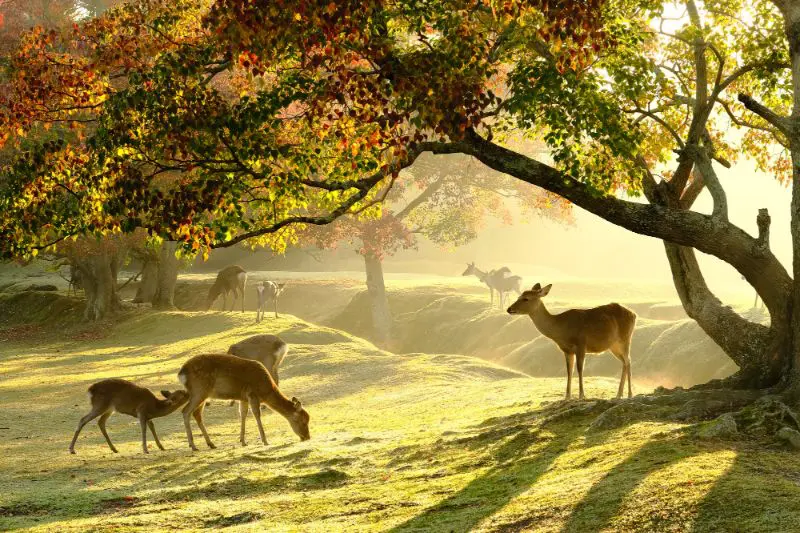
Perhaps the most famous residents of Nara Park are the over 1,200 free-roaming deer that call the park their home. These deer, considered sacred in Shinto tradition, have become a symbol of the city. According to legend, they are messengers of the gods.
The deer in Nara Park are remarkably tame and have adapted to human interaction. Visitors can buy special deer crackers, known as “shika senbei,” to feed them. The deer have even learned to bow in exchange for food, creating an unforgettable experience for those who visit.
Despite their friendly demeanor, it’s important to treat the deer with respect. While they are accustomed to people, they are still wild animals, and care should be taken when feeding or approaching them.
Scenic Beauty and Seasonal Highlights
Nara Park is a visual feast for nature lovers throughout the year. The changing seasons transform the park into a vibrant canvas of colors and landscapes.
-
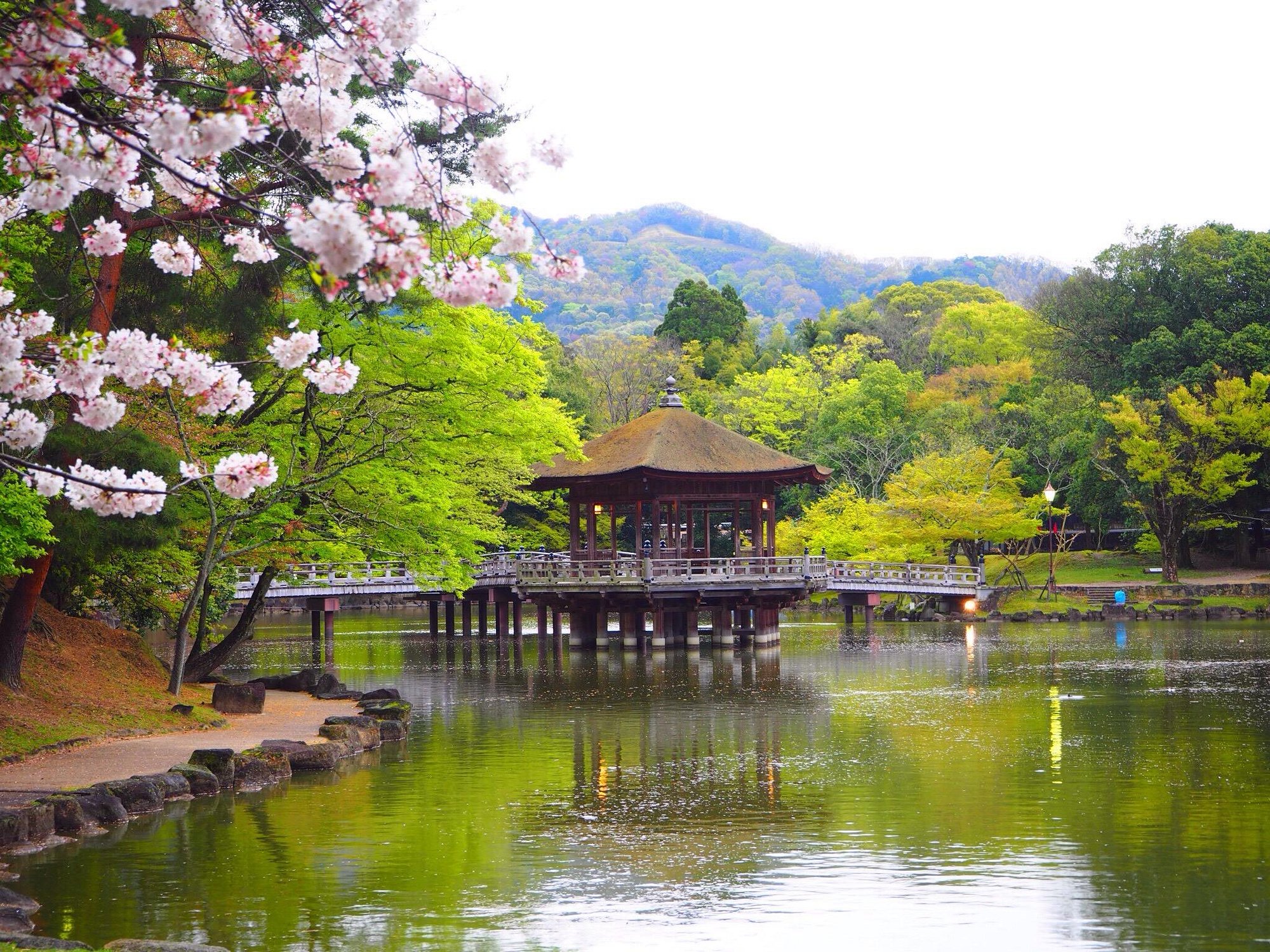
Cherry Blossoms (Sakura): In spring, the park is blanketed with delicate cherry blossoms, attracting visitors from all over the world. The sight of pink petals framing ancient temples and shrines is truly magical.
-
Autumn Foliage: In the fall, the park’s trees burst into shades of red, orange, and yellow. The colorful foliage creates a picturesque setting, especially around the temples and along the park’s walking paths.
-
Winter Serenity: During winter, the park is often covered in a light dusting of snow, offering a peaceful and quiet atmosphere for visitors who enjoy crisp air and fewer crowds.
Exploring the Park
Nara Park is designed for leisurely exploration. Visitors can take a stroll along its well-maintained paths, which lead to various cultural landmarks and scenic viewpoints. The park also features beautiful ponds, gardens, and small hills, providing plenty of photo opportunities and places to relax.
For those looking to explore further, Nara City offers a variety of other attractions just a short walk from the park, including Naramachi, a traditional merchant district filled with quaint shops, cafes, and museums.